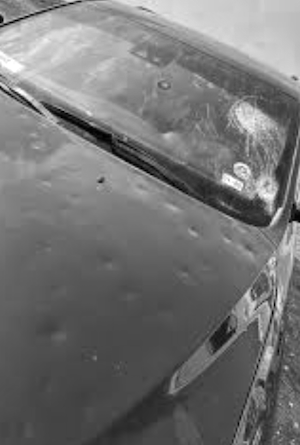
Scott Keith Pryor's dealership sold hail-damaged vehicles. Investigators say the titles revealed a much bigger problem.
Critical Shifts:
A title fraud investigation into hundreds of hail-damaged vehicles culminated on June 4, 2026, when a Laramie County District Court judge authorized the arrest of Scott Keith Pryor, owner of the Salt Lake City dealership The Good Car Dealer. Prosecutors allege Pryor participated in a scheme involving forged vehicle title documents, resulting in 15 felony charges.
The charges stem from a months-long investigation that investigators say uncovered an alleged effort to transform vehicles sold strictly for parts into inventory that could be legally resold. According to investigators, Shane Fox, a Senior Investigator with the Wyoming Department of Transportation's (WYDOT) Compliance and Investigation Section, traced the alleged scheme to approximately 292 hail-damaged vehicles purchased through Copart salvage auctions over the previous year—representing nearly $2 million in inventory.
Many of those vehicles carried the ultimate auction kiss of death: a "parts-only" designation. In the automotive world, a parts-only bill of sale means a vehicle is legally dead. It cannot be registered, insured, or driven again. But to an unscrupulous operator, those severely damaged, low-cost wrecks can represent an opportunity to convert salvage inventory into vehicles that could potentially command retail prices. According to investigators, the alleged scheme was designed to obtain Wyoming titles that omitted the vehicles' "parts-only" status, allowing the vehicles to be resold.
Following the Paper Trail
The alleged scheme began to unravel through paperwork. According to investigators, duplicate title applications were submitted to the Laramie County Clerk's Office claiming the original titles had been lost. As Investigator Fox reviewed the filings, patterns began to emerge that prompted a closer examination.
One application belonged to an active-duty U.S. Air Force service member stationed at F.E. Warren Air Force Base in Cheyenne. When contacted, the airman told investigators the signature on the duplicate title application was not his and that he had never signed the document.
Fox then contacted the Wyoming notaries whose names and seals appeared on multiple title applications. According to the investigation, each denied notarizing the documents, saying both the signatures and notary stamps were fraudulent.
 Then came the application investigators say changed the case. A duplicate title application dated March 5, 2026, bore the purported signature of a local Wyoming woman who had died on July 12, 2025—weeks before the August 2025 Cheyenne hailstorm that ultimately sent thousands of damaged vehicles to salvage auctions.
The paperwork, investigators concluded, wasn't just inconsistent, it was impossible. According to investigators, Pryor told them he had used a Facebook-based service known as "Tennessee Titles," paying approximately $150 per application to prepare the paperwork. He reportedly knew his contacts only as "Rashard" and "Miss Catherine."
When investigators asked for the Facebook messages documenting those transactions, Pryor said the computer containing the communications had been replaced and the records were no longer available. Investigators also reported that he admitted obtaining lien releases and mailing the completed money orders to the county clerk.
More Than Just Paperwork
To many dealerships, title work feels like routine administration. Investigators view it differently. A vehicle title establishes legal ownership, documents branding history, and serves as one of the primary safeguards protecting buyers from concealed damage histories. When investigators believe those records have been falsified, what starts as a paperwork review can quickly become a criminal case.
The Wyoming investigation also reflects a broader trend: title fraud and title-washing schemes have increasingly become targets for state and federal law enforcement agencies.
A notable federal example involved Alexander Igolnikov, a Chicago-area auto broker and owner of Seven Amigos Used Cars Inc. Federal prosecutors alleged that Igolnikov and his associates purchased severely damaged salvage vehicles, then submitted fraudulent paperwork—including forged law enforcement signatures—to obtain rebuilt titles.
Prosecutors said the group later concealed those rebuilt designations in an effort to obtain clean titles in Illinois, ultimately placing 112 washed-title salvage vehicles into service. Igolnikov was convicted of conspiracy to transport, receive, and possess counterfeit securities, a federal offense because vehicle titles are legally classified as securities, and was sentenced to prison.
Cases like that demonstrate why investigators often treat title fraud as more than an administrative violation. A falsified title can conceal a vehicle's true history, undermine state safeguards, and expose those involved to serious criminal consequences.
The charges against Scott Keith Pryor remain allegations, and he is presumed innocent unless proven guilty in court. The investigation was first reported by Cowboy State Daily, which brought the allegations and underlying title documents to public attention.
Investigators didn't need hidden bank accounts or elaborate financial trails to build this case. According to the charging documents, much of the evidence came from the title applications themselves—documents investigators say contained forged signatures, counterfeit notary seals, and, in one instance, the name of a woman who had already died.
Sometimes the strongest evidence isn't hidden at all. Sometimes it's sitting in a filing cabinet.