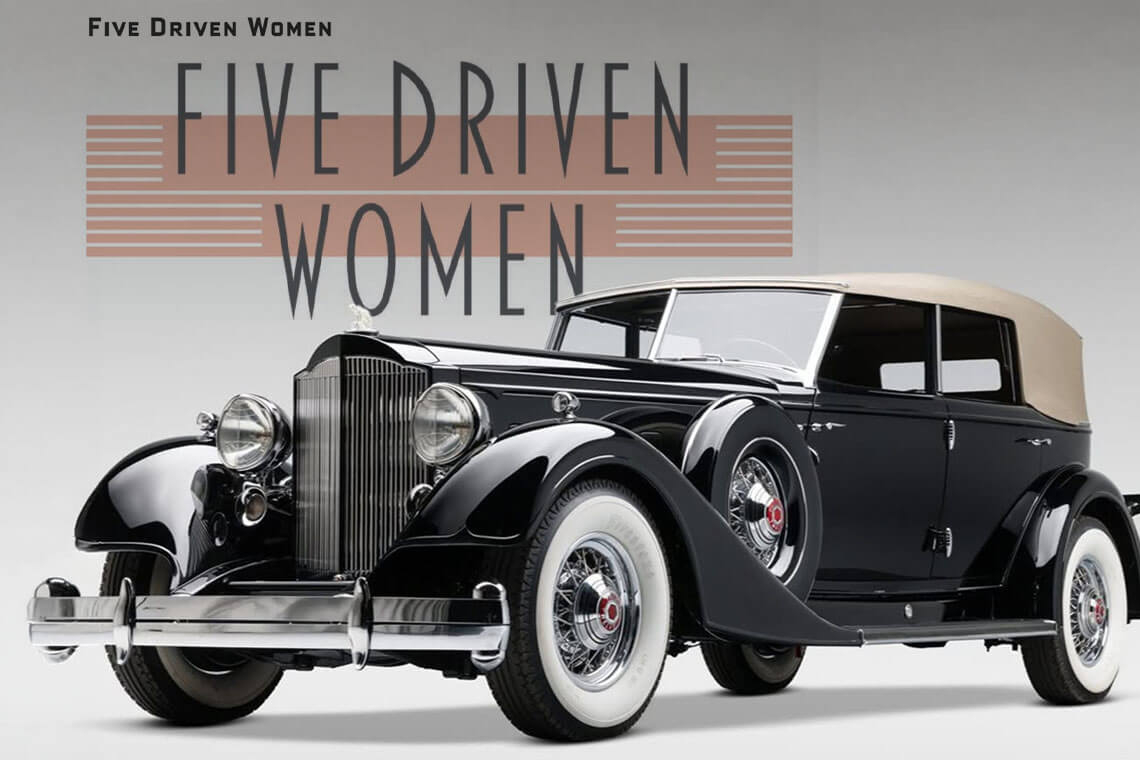
The Studebaker National Museum’s landmark exhibition, Five Driven Women, running through July 19, features three historic vehicles from Jack Boyd Smith Jr.’s The JBS Collection and explores how automobiles expanded freedom, opportunity, and independence for women during the early twentieth century. The exhibition coincides with the eighth annual Concours d’Elegance at Copshaholm, one of the Midwest’s premier celebrations of automotive design and history, co-presented by The JBS Collection and LaVine Restorations, Inc.
Presented by the Studebaker National Museum – with special thanks to The JBS Collection, The Singleton Collection, the Classic Car Club of America Museum, and LaVine Restorations – Five Driven Women brings together rare automobiles and compelling personal stories to highlight the lives of five trailblazing women and examine how mobility helped redefine women’s roles in American society during a period of profound social change.
Among the five vehicles are three from Smith Jr.’s renowned assemblage: a 1928 Hudson Series O Town Car that belonged to socialite Maribel Schumacher, the 1934 Packard Twelve 1108 Custom Convertible Dietrich Sedan originally commissioned by female explorer and adventurer, Louise Arner Boyd, and the iconic 1937 Cord 812 Phaeton Convertible owned by, and famously photographed with, legendary American aviator Amelia Earhart.
“All five of these automobiles tell incredible stories that extend well beyond transportation,” said Smith Jr., whose collection is ranked No. 82 worldwide by The Classic Car Trust’s The Key publication. “These vehicles represent ambition, courage, exploration, and independence. The women featured in this exhibition challenged expectations and expanded what was possible in their lives and in their respective fields. We are honored to share three of our vehicles with the Studebaker National Museum and help bring these important stories to a broad audience during one of this region’s most exciting weeks of the year for automotive enthusiasts.”
Through these historically significant vehicles, the exhibit – which also presents the Brass Era 1912 Simplex Torpedo previously owned by athlete Eleanora Sears, and philanthropist Margaret Dunning’s 1930 Packard 740 – reveals how the automobile became a powerful symbol of personal independence and possibility, and helped women shape their own paths and gain the keys to their own freedom.
Located in the heart of Indiana’s historic automotive corridor, the Studebaker National Museum is internationally recognized for preserving and interpreting more than a century of transportation, innovation, and industrial history. Home to one of the nation’s premier automotive collections, the museum connects visitors to the people, technologies, and companies that helped shape America’s mobility story, while serving as a cultural anchor for South Bend, its downtown, and the surrounding region.
The exhibition’s run culminates at the 2026 Concours d’Elegance at Copshaholm on July 11, when collectors, historians, and enthusiasts from across the country – and all over the world – will gather on the grounds of the historic Copshaholm estate and the Studebaker National Museum campus